
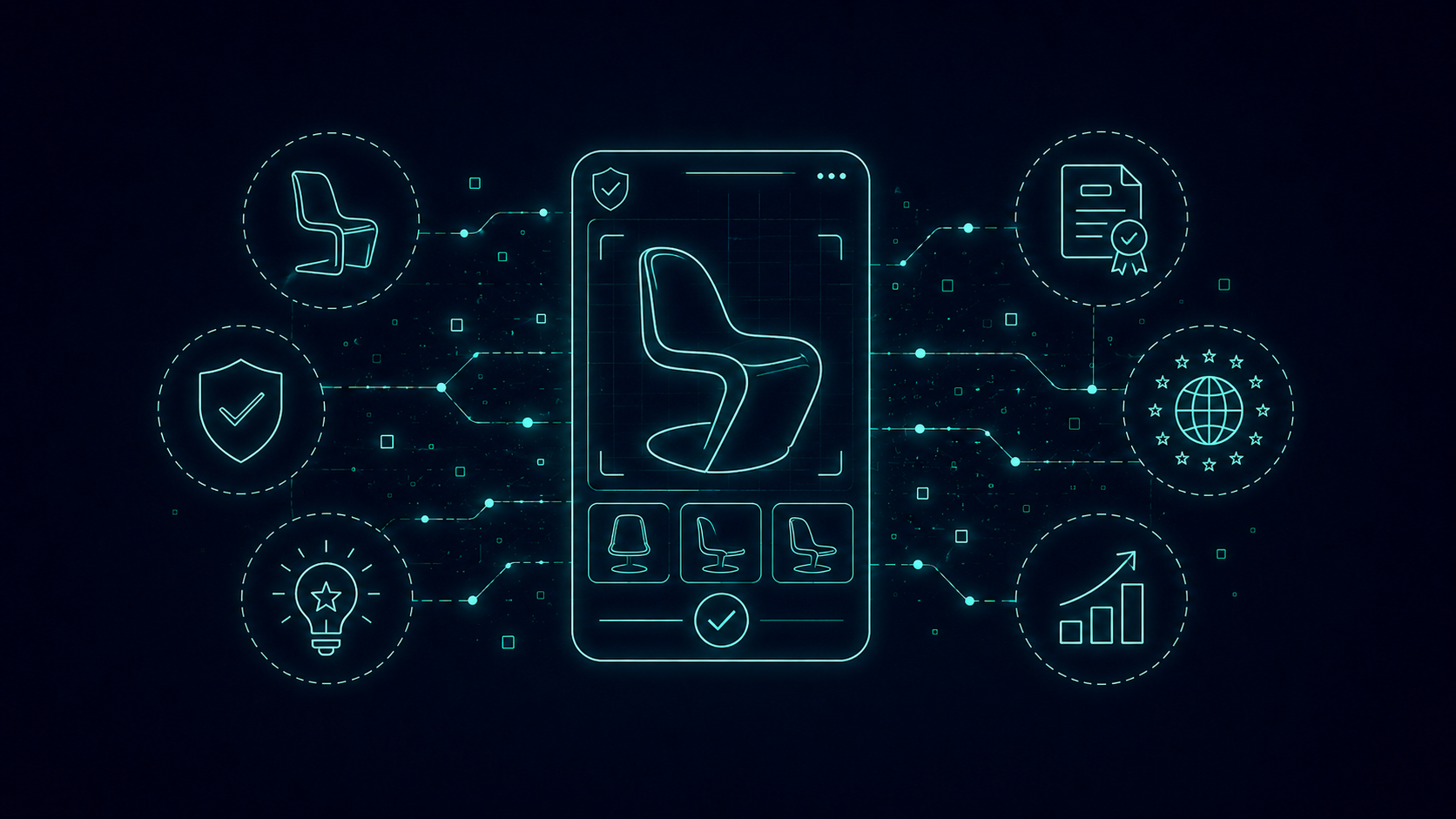
A registered design can protect the external appearance of a product, provided that the design is new and has individual character. A design is considered new when an identical design has not been made available to the public before the filing date of the application. A design has individual character when the overall impression it produces differs from the overall impression produced by another design that was made available to the public before that date.
Patent or registered design?
Many people find it difficult to distinguish between a patent and a registered design. A patent protects the function, operation or technical construction of an invention. It may be granted for an invention in any field of technology, provided that the invention is new, inventive and capable of industrial application.
The principal difference is therefore that a registered design protects only the appearance of a product, while its technical function may potentially be protected by a patent.
How do you register a design?
The first step is to determine the territory in which you want to protect the design. You may apply for protection in Slovenia or throughout the European Union. A design may also be registered in countries outside Europe.
International registration has been simplified by the Hague System, which enables applicants to seek design protection in participating countries through the World Intellectual Property Organization, or WIPO.
In Slovenia, design registration proceedings are conducted before the Slovenian Intellectual Property Office. After an application has been filed, the Office carries out a formal examination and verifies whether the application complies with the requirements of the Slovenian Industrial Property Act.
The Office does not examine whether the design satisfies the substantive requirements of novelty and individual character. These requirements may become relevant later, particularly if the holder of an earlier identical or similar design initiates proceedings seeking a declaration that the registered design is invalid.
When the application contains no deficiencies, or when any identified deficiencies are corrected within the prescribed period, the Office issues a decision registering the design and enters it in the register.
A very similar procedure applies when seeking protection for a design throughout the European Union before the European Union Intellectual Property Office, or EUIPO.
Iconic designs
Many designs that were initially considered innovative and distinctive have become part of everyday life. Over time, people have become so familiar with them that they now appear entirely ordinary.
The instantly recognisable Coca-Cola bottle dates back to 1915, when the Coca-Cola Company asked its bottle suppliers to develop a new bottle that would be unique and immediately recognisable, even in the dark.
The designer wanted the packaging to be inspired by one of the drink’s ingredients. Unable to find an image of a coca leaf or kola nut, he used the shape of a cocoa pod as inspiration. This led to the bottle’s iconic contoured and ribbed appearance.
Three of the best-known industrial designs to have influenced the technology sector are undoubtedly the iPod, iPhone and iPad. The iPod was first introduced in 2001, followed by the first iPhone in 2007 and the first iPad three years later.
Cooking and baking enthusiasts will also be familiar with the KitchenAid stand mixer. It was originally developed for industrial use on United States Navy warships but later became a widely recognised household appliance.
One of the more unusual designs, which is unlikely to be found in every home, is a washbasin incorporating an aquarium. Fish enthusiasts seeking a distinctive bathroom feature may replace conventional ceramic fixtures with this particularly unusual product design.
Those considering protecting the appearance of a product through design registration may contact the Lemur Legal team at info@lemur.legal.